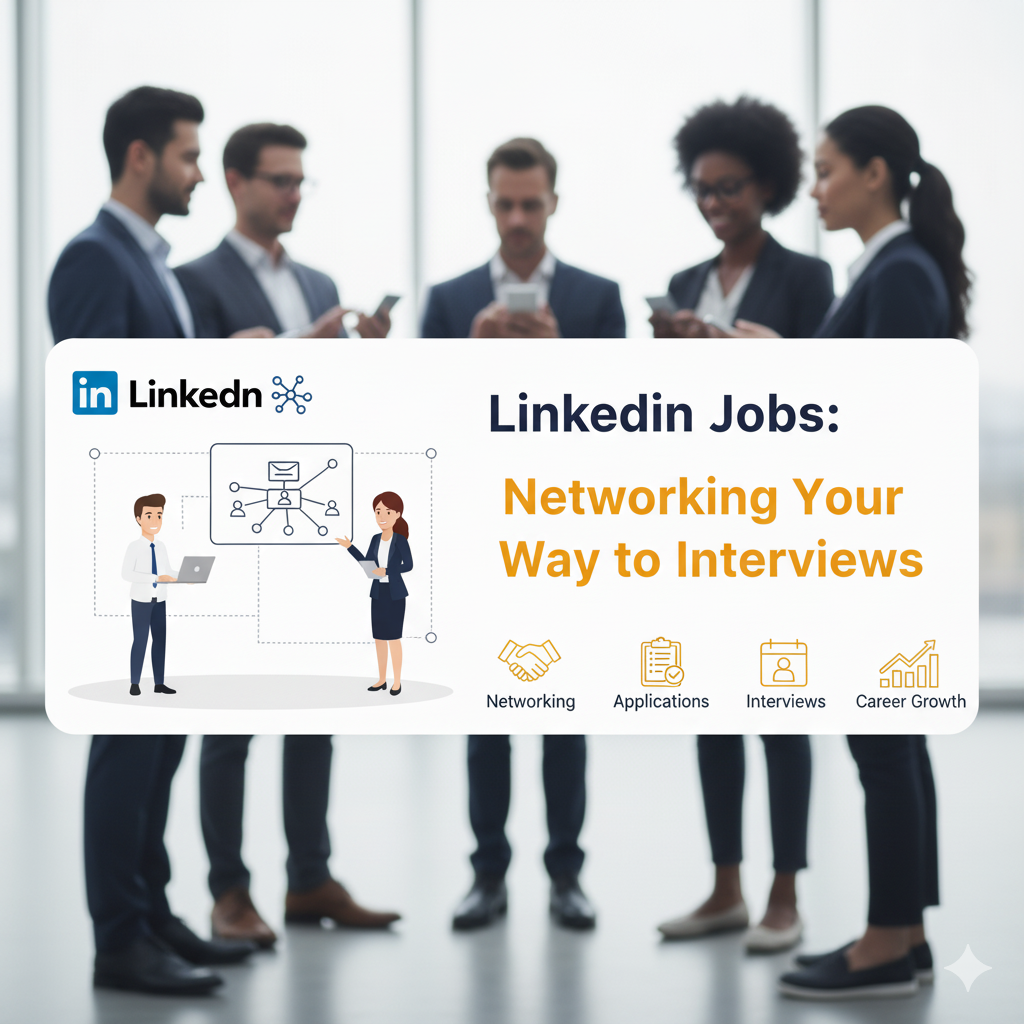
Many professionals rely solely on submitting applications through LinkedIn Jobs, but they’re missing a crucial strategy that significantly increases interview chances.
Building genuine professional connections transforms your job search from a numbers game into a relationship-driven process.
The reality is that networking on LinkedIn remains one of the most powerful ways to land interviews. Studies consistently show that candidates who combine strategic networking with their job applications receive considerably more interview invitations than those who simply click “apply.” Your network becomes your most valuable asset in today’s competitive job market.
This comprehensive guide reveals how to leverage LinkedIn Jobs alongside smart networking tactics to secure more interview opportunities.
You’ll discover proven strategies that professionals across industries use to transform casual connections into meaningful conversations with hiring managers and recruiters.
Whether you’re actively job hunting or passively exploring new opportunities, understanding how to network effectively on LinkedIn can accelerate your career progression.
From optimizing your profile to crafting compelling outreach messages, each section provides actionable steps you can implement immediately.
Ready to move beyond traditional job applications and start building relationships that lead to interviews? Let’s explore the networking strategies that will set you apart from other candidates and help you land your next opportunity.
Understanding LinkedIn Jobs and Its Networking Potential
LinkedIn Jobs serves as more than just a job board where you submit applications and hope for responses. The platform integrates seamlessly with your professional network, allowing you to see which connections work at companies you’re interested in.
This transparency creates unique opportunities to approach job openings through warm introductions rather than cold applications.
When you search for positions on LinkedIn Jobs, the platform displays how you’re connected to current employees at target companies.
These connection insights reveal potential referral sources and networking entry points. Companies frequently prioritize candidates who come recommended by current employees, making these connections incredibly valuable for your job search.
The Easy Apply feature streamlines application submission, but it shouldn’t be your only approach. While convenient, relying exclusively on Easy Apply means you’re competing with dozens or hundreds of other applicants who took the same shortcut. Strategic networking allows you to stand out before your application even reaches a recruiter’s desk.
Many professionals benefit from career coaching services to refine their networking approach and develop personalized strategies that align with their career goals. Professional guidance can help you identify the most effective tactics for your specific industry and experience level.
LinkedIn’s algorithm also favors active networkers by showing their profiles more frequently in recruiter searches. When you consistently engage with your network through thoughtful comments, shares, and messages, you increase your visibility to hiring managers who might be searching for candidates with your background.
Building Your Foundation: Profile Optimization for Interview Success
Your LinkedIn profile serves as your digital handshake and first impression with potential employers. Before launching any networking efforts, ensure your profile communicates your professional value clearly and compellingly.
Recruiters and hiring managers often review profiles before deciding whether to respond to connection requests or move forward with interview invitations.
Start with a professional profile photo that presents you as approachable yet polished. Invest in professional headshot photography if possible, as profiles with quality photos receive substantially more views and connection acceptances.
Your headline should extend beyond your current job title to include key skills or value propositions that immediately capture attention.
The About section provides prime real estate to tell your professional story in your own words. Write in first person to create a personal connection, highlighting your key achievements, areas of expertise, and what drives your career passion. Include relevant keywords naturally throughout this section to improve discoverability in recruiter searches.
Your experience descriptions should focus on accomplishments rather than just listing duties. Use specific metrics where possible, such as “increased team productivity by implementing new workflows” rather than “responsible for team productivity.” Quantifiable achievements give hiring managers concrete evidence of your capabilities.
Consider LinkedIn profile optimization services if you’re not getting profile views or connection acceptances despite your networking efforts. Professional optimization can identify gaps in your profile and implement strategic improvements that increase your visibility to recruiters and potential connections.
Skills endorsements and recommendations add social proof to your profile. Request recommendations from former managers, colleagues, and clients who can speak to your specific strengths. These testimonials provide third-party validation that strengthens your credibility when reaching out to new connections or applying for positions.
Strategic Connection Building: From Cold Contacts to Warm Introductions
LinkedIn operates on a three-tier connection system that shapes your networking strategy. First-degree connections are people you’re directly connected with, second-degree connections are friends of your connections, and third-degree connections extend one step further. Understanding this hierarchy helps you prioritize your networking efforts for maximum impact.
Begin by strengthening your existing first-degree network. Review your current connections and identify people who work at your target companies or in your desired role. Send them personalized messages expressing genuine interest in their career path and asking for informational interviews. These warm contacts provide the easiest entry points to your target organizations.
When reaching out to second-degree connections, reference your mutual connection to establish immediate credibility. A message like “I noticed we’re both connected with Sarah Johnson, who spoke highly of your expertise in data analytics” creates context and increases response rates. Ask your mutual connection if they’d be comfortable making an introduction before sending your request.
Third-degree and beyond connections require more careful approach since you have no shared network. Focus on finding common ground through shared interests, alma maters, professional associations, or industry groups. Join relevant LinkedIn groups where your target connections are active and contribute meaningfully to discussions before sending connection requests.
Timing matters significantly in connection outreach. Avoid sending connection requests during busy Monday mornings or late Friday afternoons when professionals are less likely to engage thoughtfully. Mid-week during business hours typically yields better response rates, though this can vary by industry and role.
Mastering Informational Interviews as Networking Bridges
Informational interviews serve as valuable stepping stones between initial networking and formal job interviews. These casual conversations allow you to learn about roles, companies, and industries while building relationships with potential advocates who might recommend you for future opportunities. The key is approaching these conversations with genuine curiosity rather than immediate job-seeking intent.
Request informational interviews by clearly stating your purpose and respecting the person’s time. A message like “I’m exploring opportunities in product management and would love to hear about your experience at TechCorp. Would you have 15-20 minutes for a brief call?” demonstrates respect for their schedule while expressing specific interest in their expertise.
Prepare thoughtful questions that show you’ve researched both the person and their organization. Ask about their career journey, what they enjoy most about their role, challenges they’ve faced, and advice they’d give someone entering their field. Avoid asking about specific job openings during initial informational interviews, as this can make the conversation feel transactional.
During the conversation, listen actively and take notes on key insights they share. Ask follow-up questions that demonstrate engagement with their responses. Share relevant aspects of your own background when appropriate, but keep the focus primarily on learning from their experience rather than promoting yourself.
Many professionals find that interview preparation courses help them develop the questioning and conversation skills that make informational interviews more productive and natural. Strong interviewing abilities translate directly to these networking conversations.
Always send a thoughtful thank-you message within 24 hours of your informational interview. Reference specific insights they shared and explain how their advice will influence your career decisions. This follow-up reinforces the positive impression you made and keeps you top-of-mind for future opportunities.
Leveraging LinkedIn Premium Career Features for Networking Advantages
While free LinkedIn features support effective networking, LinkedIn Premium Career provides specific tools that can accelerate your interview generation efforts. The subscription includes InMail credits that allow you to message professionals outside your network, removing the barrier of needing mutual connections for initial outreach.
InMail messages receive significantly higher response rates than standard connection requests when crafted thoughtfully. Use these messages to reach hiring managers directly about positions you’re interested in, or to connect with recruiters specializing in your field. Personalize each InMail by referencing specific aspects of the recipient’s profile or work that caught your attention.
The “Who’s Viewed Your Profile” feature provides insights into which professionals and recruiters are checking you out. Premium subscribers see the complete list rather than just the most recent five viewers, allowing you to identify potential opportunities and reach out proactively to people who’ve shown interest in your background.
Applicant insights show how you compare to other candidates applying for specific positions. This information helps you understand where you stand competitively and what skills or experience you might emphasize in your networking conversations. You can address any gaps strategically by highlighting transferable skills or recent learning experiences.
The Featured Applicant benefit moves your application higher in recruiter queues when you apply through Easy Apply. Combined with strategic networking, this visibility increase can lead to faster responses from hiring teams. However, remember that networking outreach should complement, not replace, your direct applications.
Consider whether LinkedIn Premium Career justifies the investment based on your job search intensity and timeline. If you’re actively seeking opportunities and networking extensively, the premium features often provide enough value to offset the monthly cost. Passive job seekers might find the free version sufficient for maintaining their network.
Crafting Compelling Outreach Messages That Generate Responses
Your initial message to a potential connection significantly impacts whether they’ll respond positively or ignore your request. Generic messages like “I’d like to add you to my professional network” get deleted immediately, while personalized, value-focused messages spark conversations that can lead to interviews.
Start with a specific hook that references something from their profile, a recent post they shared, or a mutual interest. “I really appreciated your recent article about remote work challenges” or “I noticed we both studied at State University” creates immediate common ground. This personalization proves you’ve invested time learning about them rather than sending mass connection requests.
Clearly state why you’re reaching out and what you hope to gain from the connection. Be honest about your intentions while keeping the focus on mutual benefit. “I’m exploring opportunities in healthcare technology and would value learning from your experience leading product teams at MedTech Solutions” combines transparency with respect for their expertise.
Keep your messages concise while including essential information. Aim for 3-4 sentences that introduce yourself, explain your connection to them or their work, and suggest a specific next step. Long-winded messages feel overwhelming and are less likely to receive responses, especially from busy professionals receiving multiple requests daily.
End with a clear, low-pressure call to action. Rather than immediately requesting a call, consider asking a specific question they can answer briefly or suggesting you’d love to learn more about their career path “if they’re open to connecting.” This gentle approach respects their time while expressing genuine interest.
Track your outreach efforts systematically so you can follow up appropriately. If someone doesn’t respond within a week, send a brief, friendly follow-up message. Many professionals simply miss messages in busy inboxes, and a polite reminder often generates the response your initial message deserved.
Converting Connections Into Interview Opportunities
Building connections is just the beginning—converting those relationships into actual interview opportunities requires strategic follow-through and relationship nurturing. The goal isn’t to immediately ask every connection for a job lead, but rather to stay visible and valuable so opportunities naturally emerge from your network.
Engage consistently with your connections’ content by liking, commenting thoughtfully on their posts, and sharing relevant articles they might find interesting. This regular, authentic interaction keeps you present in their LinkedIn feeds and minds without being pushy. When hiring managers or recruiters in your network post about open positions, your previous engagement makes them more likely to think of you.
Share your own valuable content regularly to position yourself as a knowledgeable professional in your field. Post insights from your work experience, industry trends you’re observing, or lessons learned from professional development activities. This content creation demonstrates expertise and gives your network reasons to engage with you and remember your capabilities.
When you learn about an opening that interests you, check if anyone in your network works at that company. Send them a message expressing your interest and asking if they’d be willing to share insights about the role or company culture. Many professionals are happy to provide insider perspectives, and some will proactively offer to refer you or introduce you to the hiring manager.
Timing your outreach strategically can significantly impact results. When you see a connection recently posted about company news, team expansion, or their own career moves, that’s an ideal moment to reach out and congratulate them while expressing interest in learning more about opportunities at their organization.
Don’t neglect connections who might not directly hire you but could make valuable introductions. Recruiters in your network often know about openings before they’re publicly posted. Former colleagues who’ve moved to target companies can provide referrals that bypass traditional application processes. Your entire network represents potential pathways to interviews.
Combining Job Search Platforms for Maximum Interview Pipeline
While LinkedIn excels at relationship-driven job searching, supplementing it with other job search platforms creates a more robust interview pipeline. Each platform serves different purposes and reaches different employer audiences, so a multi-channel approach maximizes your visibility to potential employers.
Traditional job boards like Indeed and Glassdoor aggregate listings from numerous sources and often include positions from smaller companies that might not actively recruit on LinkedIn. These platforms allow you to set up job alert platforms that notify you immediately when relevant positions are posted, ensuring you can apply quickly when new opportunities arise.
Industry-specific job boards often feature opportunities from employers deeply embedded in your target sector. Whether you’re in technology, healthcare, education, or another field, specialized platforms connect you with employers specifically seeking your expertise. These niche sites typically generate less competition than general platforms.
Company career pages should also factor into your search strategy. If you’ve identified target employers through your networking efforts, visit their websites directly to see all open positions. Many companies post openings on their own sites before distributing them to job boards, giving you early application opportunities.
Recruitment agency relationships provide another valuable channel, especially for senior-level positions or specialized roles. Recruiters actively place candidates with their client companies and can advocate for you throughout the hiring process. Building relationships with recruiters in your industry creates additional pathways to interviews.
Use ATS optimization tools to ensure your resume and profile pass the automated screening systems many companies use. These tools identify keywords and formatting issues that might cause your application to be filtered out before human reviewers see it. Technical optimization complements your networking efforts by ensuring your materials perform well in both automated and manual reviews.
Maintaining Your Network for Long-Term Career Success
Effective networking extends far beyond your current job search. Building and maintaining a strong professional network creates ongoing career advantages, from learning about opportunities before they’re advertised to receiving advice when facing professional challenges. The relationships you nurture today become valuable assets throughout your entire career.
Set aside regular time for network maintenance rather than only reaching out when you need something. Share congratulations when connections announce promotions or new positions, comment on their professional achievements, and offer help or resources when you see opportunities to provide value. This genuine engagement builds reciprocal relationships that naturally lead to mutual support.
Schedule periodic check-ins with key connections through brief messages or occasional coffee meetings if you’re in the same location. These touchpoints don’t need formal agendas—simply catching up and maintaining the relationship keeps the connection warm. Many professionals find that career transition programs include networking maintenance strategies as part of their structured approach.
Organize your connections using LinkedIn’s relationship management features or an external spreadsheet. Track when you last connected with important contacts, notes from your conversations, and reminders for future follow-up. This organization prevents valuable relationships from going cold due to neglect.
Give back to your network by making introductions, sharing job leads, and offering your expertise when connections seek advice. Networking is inherently reciprocal—the value you provide to others returns to you in unexpected ways. Being known as a generous, helpful connection makes others eager to assist you when opportunities arise.
Continue expanding your network even when you’re not actively job searching. Join industry associations, attend professional networking events both virtual and in-person, and participate in LinkedIn groups relevant to your field. A diverse, active network positions you to hear about opportunities organically rather than having to conduct intensive searches.
Conclusion
Leveraging LinkedIn Jobs through strategic networking transforms your job search from submitting applications into building relationships that naturally lead to interview opportunities. By optimizing your profile, engaging authentically with connections, conducting informational interviews, and maintaining your network consistently, you position yourself to hear about opportunities before they’re widely advertised.
Remember that networking success comes from genuine relationship building rather than transactional outreach. Focus on providing value to your connections, showing authentic interest in others’ careers, and staying consistently engaged with your professional community. These efforts compound over time, creating a network that supports your career throughout all its phases.
Start implementing these strategies today by reviewing your LinkedIn profile, identifying target connections, and sending your first personalized outreach messages. Each connection you make and conversation you have moves you closer to your next interview opportunity and career advancement.
Frequently Asked Questions
How long does it typically take to get interviews through LinkedIn networking?
The timeline for generating interviews through LinkedIn networking varies considerably based on your industry, experience level, and networking consistency. Some professionals receive interview invitations within weeks of implementing strategic networking, while others build relationships over several months before opportunities materialize. Consistent, authentic engagement typically produces results faster than sporadic outreach efforts. Focus on building genuine relationships rather than rushing to immediate outcomes, as this approach creates more sustainable results.
Should I pay for LinkedIn Premium Career if I’m actively job searching?
LinkedIn Premium Career can provide valuable advantages during active job searches, particularly the InMail credits for direct recruiter outreach and insights into how you compare with other applicants. However, many professionals successfully network and secure interviews using only free LinkedIn features. Consider your budget, job search urgency, and whether the premium features align with your specific networking strategy. You might try Premium for a month to evaluate whether the features justify the ongoing cost for your situation.
What’s the best way to ask a connection for a job referral?
Never lead with asking for referrals immediately after connecting. First, build rapport through genuine conversations about their career experience and insights about their company. After establishing a foundation, you might mention you’re interested in specific opportunities and ask if they’d be comfortable sharing information about the role or company culture. If they offer to refer you, express gratitude and make the process easy by providing your resume and key qualifications. Many connections will offer referrals naturally if you’ve built a positive relationship.
How many connection requests should I send daily on LinkedIn?
LinkedIn doesn’t publicly specify exact limits, but sending too many connection requests too quickly can result in restrictions on your account. A safe approach involves sending between 10-15 personalized connection requests daily while maintaining high acceptance rates. Quality matters more than quantity—thoughtful, targeted connections with high response rates prove more valuable than mass requests that go ignored. Focus on connecting with people who genuinely align with your career interests and goals.
What should I do if my LinkedIn outreach messages aren’t getting responses?
Low response rates typically indicate issues with message personalization, targeting, or timing. Review your recent messages to ensure they’re specific, concise, and clearly state why you’re reaching out to that particular person. Avoid generic language that could apply to anyone. Consider whether you’re targeting appropriate connections—reaching out to senior executives as a recent graduate might yield lower responses than connecting with mid-level professionals in your field. Adjust your approach based on what’s not working and test different messaging styles.
Can I network effectively on LinkedIn if I’m currently employed and don’t want my company to know I’m job searching?
LinkedIn provides privacy settings that allow you to network discreetly while employed. Turn off profile updates so changes don’t broadcast to your network. Use the “Open to Work” feature set to “only recruiters” rather than public display. When messaging connections, you can explore career insights and build relationships without explicitly stating you’re actively job searching. Frame conversations around learning and professional development rather than immediate job seeking.
How important are endorsements and recommendations compared to active networking?
Endorsements and recommendations add credibility to your profile and can influence whether people accept your connection requests or respond to your messages. However, they serve as supporting elements rather than replacements for active networking. Strong recommendations from respected professionals in your field carry significant weight, but they work best when combined with genuine relationship building and consistent engagement. Prioritize building authentic connections while also maintaining a well-endorsed profile.