The NHS is one of the largest employers in the UK, and it recruits across a huge range of roles all year round. Many of these are entry-level NHS jobs that do not require previous experience or a university degree.
This guide explains how the official NHS Jobs portal works, the kinds of roles you can apply for, how NHS pay and bands are structured, and the steps to submit a strong application.
What NHS Jobs Is: The Official Portal
NHS Jobs is the official online recruitment portal for health service vacancies in England. It lists thousands of roles advertised by NHS trusts, hospitals, GP practices, ambulance services, mental health services and community providers.
You can browse and apply for vacancies directly through the official site at https://www.jobs.nhs.uk, which is free to use.
Because it is the central place where NHS organisations advertise their hiring, the portal lets you search by job title, location, band, employer and contract type. You can find full-time, part-time, fixed-term, bank and apprenticeship roles in one place.
Using the official site also helps you avoid third-party sites that may charge fees or show out-of-date listings.
Entry-Level NHS Roles You Can Apply For Without Experience
A common myth is that you need clinical qualifications to work for the NHS. In reality, a large share of NHS hiring is for support roles that welcome applicants with no experience. Training is usually provided on the job, and many people use these positions as a first step into a longer healthcare career.
Entry-level NHS jobs you may be able to apply for with no experience include:
- Healthcare assistant (HCA) — supporting nurses and patients with daily care, observations and comfort.
- Clinical support worker — assisting clinical teams on wards or in community settings.
- Porter — moving patients, equipment and supplies safely around a hospital site.
- Domestic / housekeeping staff — keeping clinical areas clean and safe.
- Administrative and clerical staff — reception, booking appointments, records and general office support.
- Catering and facilities roles — preparing meals and supporting hospital services.
Many of these roles are advertised as part-time as well as full-time, which can suit people balancing study, caring responsibilities or a second job. Bank roles (flexible shifts booked as needed) are another common entry route.
NHS Pay and Bands Explained
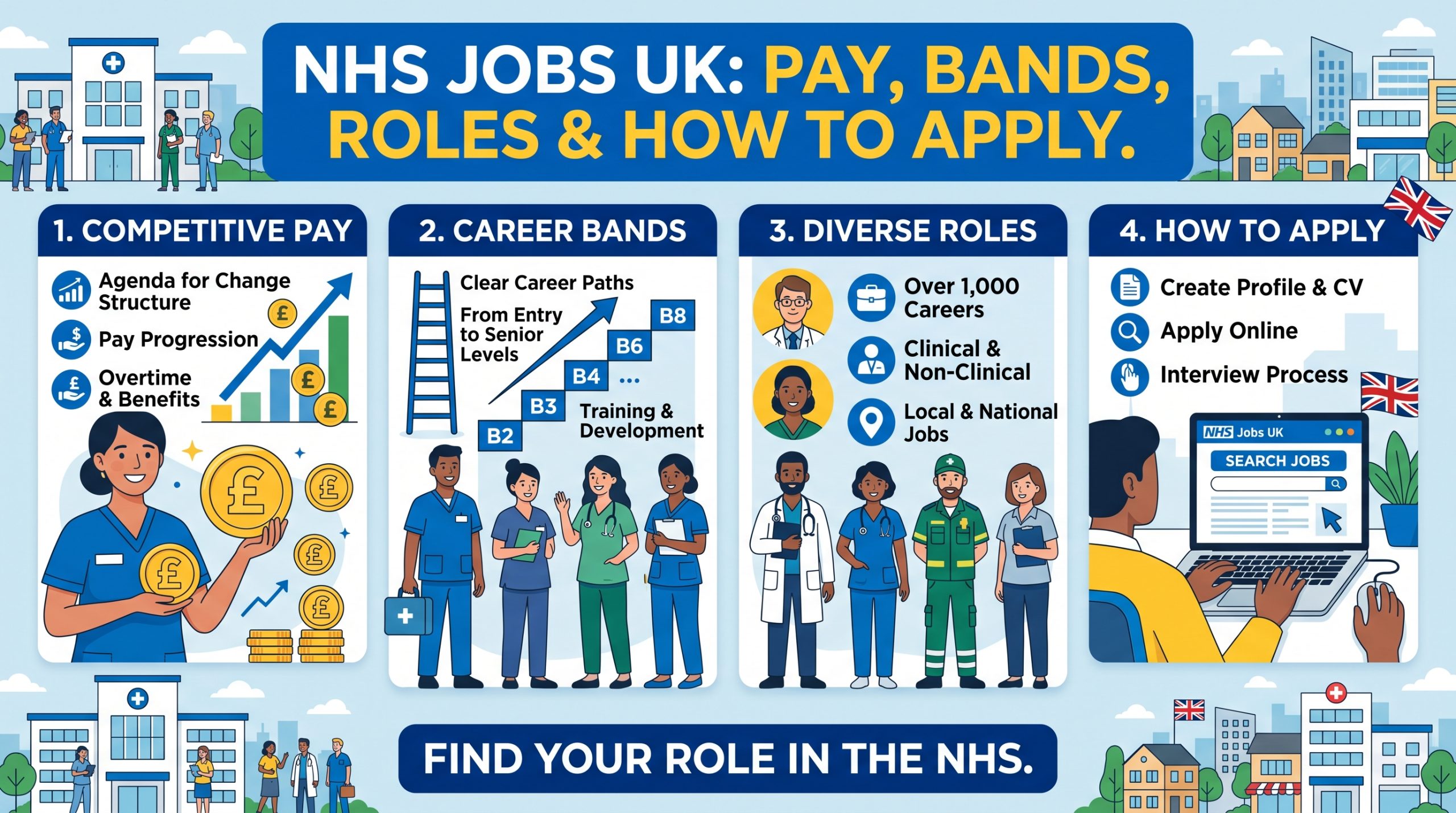
Most NHS staff (excluding doctors, dentists and some senior managers) are paid under a national system called Agenda for Change. This sets out a series of pay bands, numbered roughly from Band 2 upwards, with each band linked to the level of responsibility, skill and experience a role requires.
Pay is set nationally rather than negotiated individually, which makes NHS salary levels relatively transparent.
Entry-level roles such as healthcare assistants, porters and domestic staff typically sit at Band 2. For 2025/26, Band 2 pay is approximately £24,465 per year, which works out at roughly £12.51 per hour. These figures are approximate and should be confirmed officially, as pay can change and may vary by role, band and region.
As you gain experience or take on more responsibility, you can progress to higher bands such as Band 3 and Band 4, which pay more than Band 2. Within each band there are pay points, so your salary can also increase over time as you remain in post.
Some roles attract additional payments, for example a high cost area supplement for staff working in and around London, or enhancements for unsocial hours. NHS pay is not guaranteed for any individual and depends on the specific role you secure.
How Agenda for Change Bands Work in Simple Terms
Think of the bands as a ladder. Each rung (band) reflects more skill or responsibility and comes with a higher salary range. When you see a vacancy advertised, the band and the expected salary are usually stated clearly, so you know the pay before you apply.
Benefits of Working for the NHS
Beyond salary, NHS roles often come with a strong package of benefits. While exact terms depend on your contract and employer, common benefits include:
- NHS Pension Scheme — one of the most valued workplace pensions in the UK, with employer contributions.
- Generous annual leave — typically starting at 27 days plus bank holidays for many staff, increasing with length of service.
- Training and development — structured induction, on-the-job learning and routes to apprenticeships or further qualifications.
- Career progression — clear pathways to move into higher bands or specialise.
- Occupational sick pay and family-friendly policies — subject to eligibility.
For people entering healthcare for the first time, the combination of training and the chance to progress through the bands can make an entry-level NHS job a solid long-term move.
Requirements: What You Need to Apply
Requirements vary by role, but for many entry-level NHS jobs the bar is more accessible than people expect. Typical requirements include:
- Right to work in the UK — you will need to prove your eligibility to work here.
- A DBS check — most NHS roles require a Disclosure and Barring Service check because you may work with vulnerable people. The employer usually arranges this.
- No degree needed for many roles — support and entry-level positions generally do not require a degree, and some ask only for basic literacy and numeracy or a willingness to learn.
- References — usually covering your recent work or study history.
- Occupational health clearance — a standard health check to confirm you are fit for the role.
Always read the job description and person specification carefully, as each vacancy lists its own essential and desirable criteria.
How to Apply on NHS Jobs: Step by Step
Applying through the official NHS Jobs portal is straightforward once you know the process. Here is a typical step list:
- Create an account — register on the official site at https://www.jobs.nhs.uk so you can apply and track applications.
- Search for vacancies — filter by job title, location, band, contract type and whether the role is part-time or full-time.
- Read the job description — check the person specification, band, salary and closing date before applying.
- Complete the application form — fill in your personal details, work history, qualifications and references accurately.
- Write your supporting information — this is the most important section. Explain how you meet each point in the person specification using clear, specific examples.
- Review and submit — check everything before the closing date, then submit. You can monitor progress through your account.
If shortlisted, you will usually be invited to an interview, which may include a short assessment relevant to the role.
Tips to Stand Out in Your Application
- Mirror the person specification. Address each essential criterion in your supporting information, in the same order where possible.
- Use real examples. Even unpaid, voluntary or everyday experience can demonstrate teamwork, reliability and caring qualities.
- Show NHS values. Compassion, respect and a commitment to good care matter for patient-facing roles.
- Keep it clear and honest. Avoid exaggeration; be specific about what you have done.
- Apply early. Some NHS vacancies close as soon as enough applications are received.
- Proofread. A tidy, error-free form signals attention to detail.
Frequently Asked Questions
Do I need experience to get an NHS job?
Not always. Many entry-level NHS jobs, such as healthcare assistant, porter and domestic roles, accept applicants with no experience and provide training on the job.
How much does an entry-level NHS job pay?
Entry-level roles usually sit at Band 2, which is around £24,465 per year for 2025/26 (roughly £12.51 per hour). This is approximate and should be confirmed officially, as pay varies by role, band and region.
Are there part-time NHS jobs?
Yes. The portal lists part-time, full-time, bank and fixed-term roles, so you can filter by the hours and contract type that suit you.
Where do I apply for NHS jobs?
Use the official NHS Jobs portal, which is free to use and lists vacancies across NHS organisations in England.
Editorial Note
This is an independent informational guide and is not affiliated with, or endorsed by, the NHS or any NHS organisation. NHS pay and Agenda for Change bands are set nationally and may change over time, and the figures here are approximate. Eligibility, requirements and benefits depend on the specific role and employer.
Always verify current details, salaries and how to apply on the official NHS Jobs site before making any decisions.