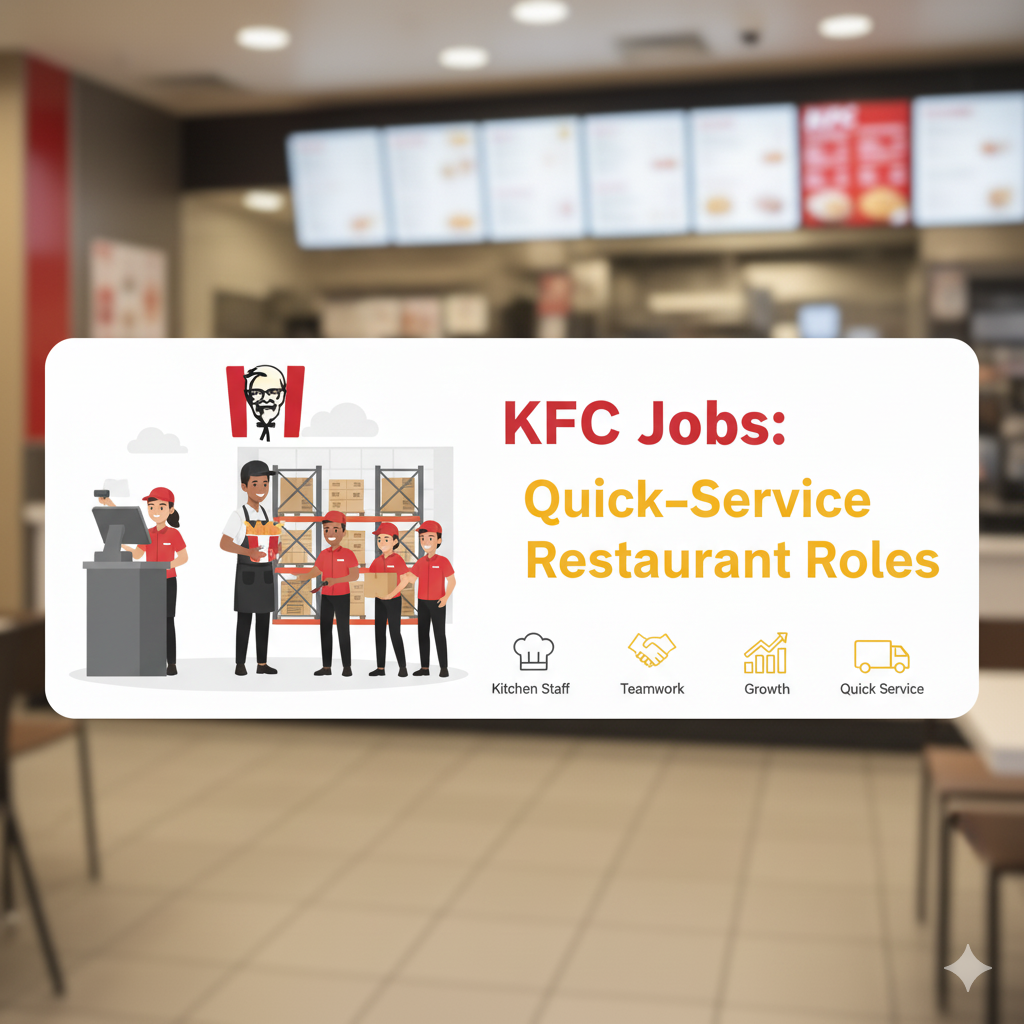
KFC jobs offer more than just a paycheck. With opportunities across various positions and skill levels, the iconic chicken chain provides accessible entry points into the food service industry.
Whether you’re seeking your first job or ready to step into management, understanding available roles makes all the difference.
KFC operates thousands of locations worldwide, creating consistent demand for reliable team members.
This guide breaks down everything from entry-level positions to leadership opportunities. You’ll discover what each role entails, typical requirements, and how to navigate the application process successfully.
We’ll cover compensation ranges, benefits packages, and the career paths available within the organization. Plus, you’ll learn where to find openings and what makes a standout application.
Ready to explore opportunities in one of the world’s most recognizable quick-service restaurant brands? Let’s dive into the specific roles and what makes them worth considering for your career journey.
Understanding KFC Team Member Positions
KFC team member roles form the backbone of restaurant operations. These positions typically include customer service representatives, cooks, and cashiers working together to deliver the signature menu.
Most locations hire team members starting at age 16. The role requires no previous experience, making it ideal for first-time job seekers or those transitioning into food service.
Daily responsibilities vary based on assignment but generally include taking orders, preparing food items, operating cash registers, and maintaining cleanliness standards. Team members often rotate between stations during shifts.
The fast-paced environment demands strong multitasking abilities. During peak hours, team members handle multiple orders simultaneously while ensuring accuracy and maintaining food safety protocols.
Compensation for these entry-level positions ranges from minimum wage to several dollars above, depending on location and experience. Many franchise operators offer shift differentials for evening and weekend work.
Key skills for success include:
- Customer service orientation: Friendly demeanor and patience when handling various customer interactions and resolving concerns professionally
- Physical stamina: Ability to stand for extended periods and maintain energy during busy service times
- Team collaboration: Working effectively with crew members across different stations to ensure smooth operations
- Attention to detail: Following food preparation procedures precisely and checking orders for accuracy
- Adaptability: Adjusting quickly to changing priorities and handling unexpected rushes efficiently
Browse thousands of available team member positions on Indeed to find KFC opportunities matching your schedule and location preferences. The platform aggregates listings from multiple franchise operators.
Front-of-House Roles: Cashier and Customer Service
Cashiers represent the first point of contact for customers. This front-line position combines order-taking, payment processing, and creating positive dining experiences.
The role requires operating point-of-sale systems efficiently while maintaining accuracy in transactions. Cashiers handle cash, credit cards, and digital payments while keeping drawers balanced.
Beyond transactions, these team members answer menu questions, explain promotions, and handle special requests. They often upsell combo meals and limited-time offerings to enhance customer satisfaction and drive sales.
Customer service representatives also manage the pack line, assembling orders with proper packaging. They ensure each item matches the receipt and meets quality standards before handoff.
Essential Cashier Competencies
Successful cashiers develop specific technical and interpersonal skills. Basic math proficiency helps with making change and processing transactions without relying solely on technology.
Communication skills prove critical when dealing with diverse customers. Clear speaking and active listening prevent order errors and improve overall service speed.
Memory and organizational abilities allow cashiers to remember regular customers, manage multiple orders, and coordinate with kitchen staff effectively during rush periods.
Back-of-House Excellence: Cook Positions
KFC cooks master the preparation of the brand’s signature recipes. This role centers on food preparation, cooking techniques, and maintaining the quality standards that define the menu.
Cooks work primarily in the kitchen, operating fryers, ovens, and other equipment. They follow precise recipes and timing protocols to ensure consistency across all menu items.
The position demands knowledge of food safety regulations and proper handling procedures. Cooks monitor temperatures, manage food storage, and maintain sanitary work environments throughout their shifts.
Physical demands include lifting supplies, standing for long periods, and working near hot equipment. Heat tolerance and coordination become essential when managing multiple cooking stations simultaneously.
| Position Level | Typical Hourly Range | Experience Required | Key Responsibility |
|---|---|---|---|
| Entry Cook | $9-$12 | None | Basic food prep |
| Experienced Cook | $11-$14 | 6-12 months | Station management |
| Lead Cook | $13-$16 | 1-2 years | Kitchen coordination |
Training programs teach proprietary recipes and cooking methods. New cooks typically spend several weeks learning proper breading techniques, frying procedures, and quality checks under supervision.
Check ZipRecruiter to compare cook positions across multiple restaurant chains in your area. The platform’s matching technology connects your experience with suitable openings.
Professional growth in cooking roles can lead to kitchen manager positions. Demonstrating consistency, leadership potential, and food safety knowledge accelerates advancement opportunities.
Stepping Up: Shift Supervisor and Management Roles
Shift supervisors bridge the gap between crew members and upper management. These positions require at least 18 years of age and typically some previous restaurant experience.
Supervisors oversee daily operations during their shifts, managing team members, handling customer escalations, and ensuring operational standards. They make real-time decisions about staffing, inventory, and service flow.
The role includes opening or closing procedures, cash handling responsibilities, and inventory management. Supervisors conduct shift briefings, assign stations, and monitor performance throughout service periods.
Leadership skills become paramount at this level. Supervisors motivate teams, provide constructive feedback, and address conflicts while maintaining operational efficiency and morale.
Compensation for shift supervisors ranges from minimum wage plus differentials to mid-teens per hour. Additional responsibilities often include training new hires and implementing corporate initiatives.
Assistant manager positions represent the next career step. These full-time roles involve deeper involvement in hiring, scheduling, financial management, and long-term planning alongside general managers.
Management training programs offered by many franchise operators prepare supervisors for increased responsibilities. Topics include labor law compliance, inventory systems, and profit-and-loss fundamentals.
Professional recruitment websites like LinkedIn feature corporate and regional management opportunities with KFC Global. These positions often require hospitality management degrees or equivalent experience.
Applying for KFC Positions: Step-by-Step Guide
The application process for KFC jobs starts with identifying available positions. Multiple channels provide access to openings, each with distinct advantages.
Official KFC careers website offers direct applications to corporate and franchise locations. The portal allows filtering by position type, location, and employment status preferences.
Major job search engines aggregate listings from various franchise operators. Indeed, SimplyHired, and similar platforms provide broader reach and comparison capabilities across multiple locations.
- Research locations: Identify KFC restaurants in your preferred area and note whether they’re corporate-owned or franchised, as application processes may differ
- Prepare documentation: Gather identification, work authorization papers, and contact information for references before starting applications
- Complete online applications: Fill out forms thoroughly with accurate information about availability, experience, and skills
- Follow up appropriately: Wait 3-5 business days before inquiring about application status, demonstrating patience and professionalism
- Interview preparation: Research common restaurant interview questions and prepare examples showcasing customer service abilities
Many locations accept walk-in applications. Visiting during off-peak hours (typically 2-4 PM) increases chances of speaking directly with managers.
Interview processes typically involve one or two rounds. Managers assess availability, reliability indicators, and cultural fit alongside basic qualifications during brief conversations.
Common interview questions focus on customer service scenarios, teamwork experiences, and availability. Preparing specific examples from previous work or volunteer experiences strengthens responses.
Benefits and Compensation Packages
KFC offers various benefits depending on employment status and location. Full-time positions generally include more comprehensive packages than part-time roles.
Meal discounts or free shift meals represent standard perks across most locations. Team members often receive significant discounts on purchases outside working hours as well.
Flexible scheduling attracts students and workers balancing multiple commitments. Many locations accommodate school schedules, allowing shifts around classes and study time.
Health benefits become available for qualifying full-time employees after probationary periods. Coverage options typically include medical, dental, and vision insurance through franchise benefit programs.
Paid time off accrues based on hours worked and tenure. Vacation days, sick leave, and personal time policies vary by franchise operator and local regulations.
Career development opportunities include internal promotion programs. Many current managers started as team members, demonstrating the organization’s commitment to advancement from within.
Educational benefits through partnerships with institutions provide tuition assistance. Some programs offer significant scholarships for employees pursuing college or trade school education.
401(k) retirement plans with employer matching become available to eligible full-time employees. Participation helps build long-term financial security alongside immediate compensation.
Regional Compensation Variations
Pay rates differ significantly based on geographic location. Urban markets and areas with higher costs of living typically offer increased starting wages to remain competitive.
State and local minimum wage laws directly impact entry-level compensation. Franchise operators adjust starting rates to comply with jurisdictions exceeding federal minimums.
Experience and demonstrated performance lead to pay increases. Regular reviews provide opportunities for raises based on skill development and reliability metrics.
Career Advancement and Professional Development
KFC provides clear pathways for motivated employees to advance. Career progression typically follows predictable patterns based on performance and availability.
Entry-level team members can reach shift supervisor roles within months of consistent performance. Demonstrating reliability, leadership potential, and mastery of multiple stations accelerates this timeline.
Specialized training programs prepare employees for increased responsibilities. Topics include food safety certification, leadership skills, conflict resolution, and operational management fundamentals.
Cross-training opportunities allow team members to develop versatile skill sets. Learning multiple positions increases scheduling flexibility and makes employees more valuable to operations.
Mentorship programs connect newer employees with experienced managers. These relationships provide guidance on skill development, performance improvement, and career goal setting.
Multi-unit opportunities exist for high-performing managers. District and regional positions oversee multiple locations, combining operational expertise with business strategy.
Corporate career paths include roles in marketing, supply chain, franchise development, and operations support. These positions typically require college degrees but value internal candidates with operational experience.
Tips for Success in Fast Food Employment
Thriving in quick-service environments requires specific strategies beyond basic job performance. Understanding these approaches helps new employees adapt and excel quickly.
Punctuality and reliability form the foundation of positive reputations. Arriving early for shifts and maintaining consistent attendance demonstrates professionalism that managers notice and reward.
Proactive learning accelerates skill development. Volunteering for additional training, asking questions, and observing experienced team members builds competence faster than passive participation.
Maintaining positive attitudes during stressful periods sets top performers apart. Rush hours test patience and composure, but handling pressure gracefully earns respect from colleagues and supervisors.
Effective communication prevents errors and builds strong team dynamics. Speaking clearly, confirming orders, and updating colleagues about station status keeps operations flowing smoothly.
Taking initiative on cleaning and preparation tasks demonstrates work ethic. Completing these responsibilities without prompting shows maturity and commitment beyond minimum requirements.
Building relationships with team members creates supportive work environments. Helping colleagues during difficult moments fosters reciprocal support and makes shifts more enjoyable.
Professional development extends beyond workplace training. Exploring resources on career websites and industry publications keeps employees informed about advancement opportunities and industry trends.
Frequently Asked Questions
What is the minimum age requirement for KFC jobs?
Most KFC locations hire team members starting at age 16 for entry-level positions. However, management and supervisor roles typically require applicants to be at least 18 years old due to increased responsibilities including cash handling and alcohol service in some markets.
Do I need previous restaurant experience to apply?
Previous experience is not required for entry-level team member positions. KFC provides comprehensive training covering food preparation, customer service, and safety protocols. However, prior food service experience can be advantageous for supervisor or management roles.
How long does the hiring process typically take?
The timeline varies by location and urgency of staffing needs. Many applicants receive interview invitations within one to two weeks of submitting applications. Following successful interviews, background checks and onboarding can take an additional few days to two weeks before starting work.
Are KFC positions part-time or full-time?
Both options exist depending on location needs and applicant preferences. Many team member roles offer part-time hours with flexible scheduling, while supervisor and management positions are typically full-time. Employees can often increase hours based on availability and performance.
What benefits do KFC employees receive?
Benefits vary by franchise operator and employment status. Common offerings include meal discounts, flexible scheduling, paid training, and career advancement opportunities. Full-time employees often qualify for health insurance, paid time off, 401(k) plans, and educational assistance programs after completing probationary periods.
How can I advance my career at KFC?
Career advancement typically progresses from team member to shift supervisor, then assistant manager and general manager. Demonstrating reliability, leadership skills, and operational knowledge accelerates promotion opportunities. Many franchise organizations prioritize internal candidates for management positions, and some offer formal development programs.
Where should I apply for KFC jobs?
Applications can be submitted through multiple channels. The official KFC careers website provides direct access to corporate and franchise openings. Major employment platforms like Indeed, ZipRecruiter, and SimplyHired aggregate listings from various locations. Some restaurants also accept walk-in applications during non-peak hours.
Conclusion
KFC jobs offer accessible entry points into the food service industry with genuine advancement potential. From team member positions requiring no experience to management roles overseeing entire operations, the organization provides clear career pathways.
Understanding available positions, compensation structures, and application processes positions candidates for success. Whether seeking part-time flexibility or full-time career development, opportunities exist across skill levels and experience backgrounds. Research openings through specialized restaurant job boards and general employment platforms to find positions matching your goals and schedule requirements.