The charity and non-profit sector is one of the largest employers in the UK, offering a wide range of charity jobs for people who want their work to make a difference. Whether you are starting out with no experience or moving across from another field, there are entry-level roles in fundraising, administration, support work and communications.
This guide explains the typical roles, realistic pay, requirements and how to apply.
Working in the UK charity sector: an overview
Charities and non-profit organisations in the UK range from small local groups with a handful of staff to large national and international bodies employing thousands. They work across causes such as health, social care, housing, education, the environment, international development and the arts.
Because the sector is so broad, the type of work, pay and culture can vary enormously from one organisation to the next.
Many people are drawn to charity jobs by the sense of purpose involved, but it is worth being realistic: charities are workplaces with budgets, deadlines and performance expectations like any other employer. Funding is often tight, which can affect pay, job security and resources.
At the same time, the sector is frequently hiring for both permanent and fixed-term roles, and there are often part-time options, which can suit students, carers and those seeking a better work-life balance.
Entry-level charity roles you can apply for
Several entry-level roles regularly appear on charity job boards. Many are open to candidates with little or no paid experience in the sector, particularly where you can show relevant volunteering or transferable skills.
- Fundraising assistant: supporting fundraising campaigns, events, donor records and administration. A common first step into the sector.
- Administrator or office assistant: handling correspondence, data entry, scheduling and general office support across teams.
- Support worker: working directly with people the charity helps, such as those experiencing homelessness, disability or ill health. Often available part-time and sometimes with no formal experience required.
- Campaigns or communications assistant: helping with social media, newsletters, website content and campaign materials.
- Volunteer coordinator: recruiting, supporting and organising volunteers, often combining administration with people skills.
These roles are good entry points because they build experience that transfers across the sector. Many charities also recruit through graduate schemes, internships and apprenticeships, which can be a structured route in for those leaving education.
Pay in the charity sector
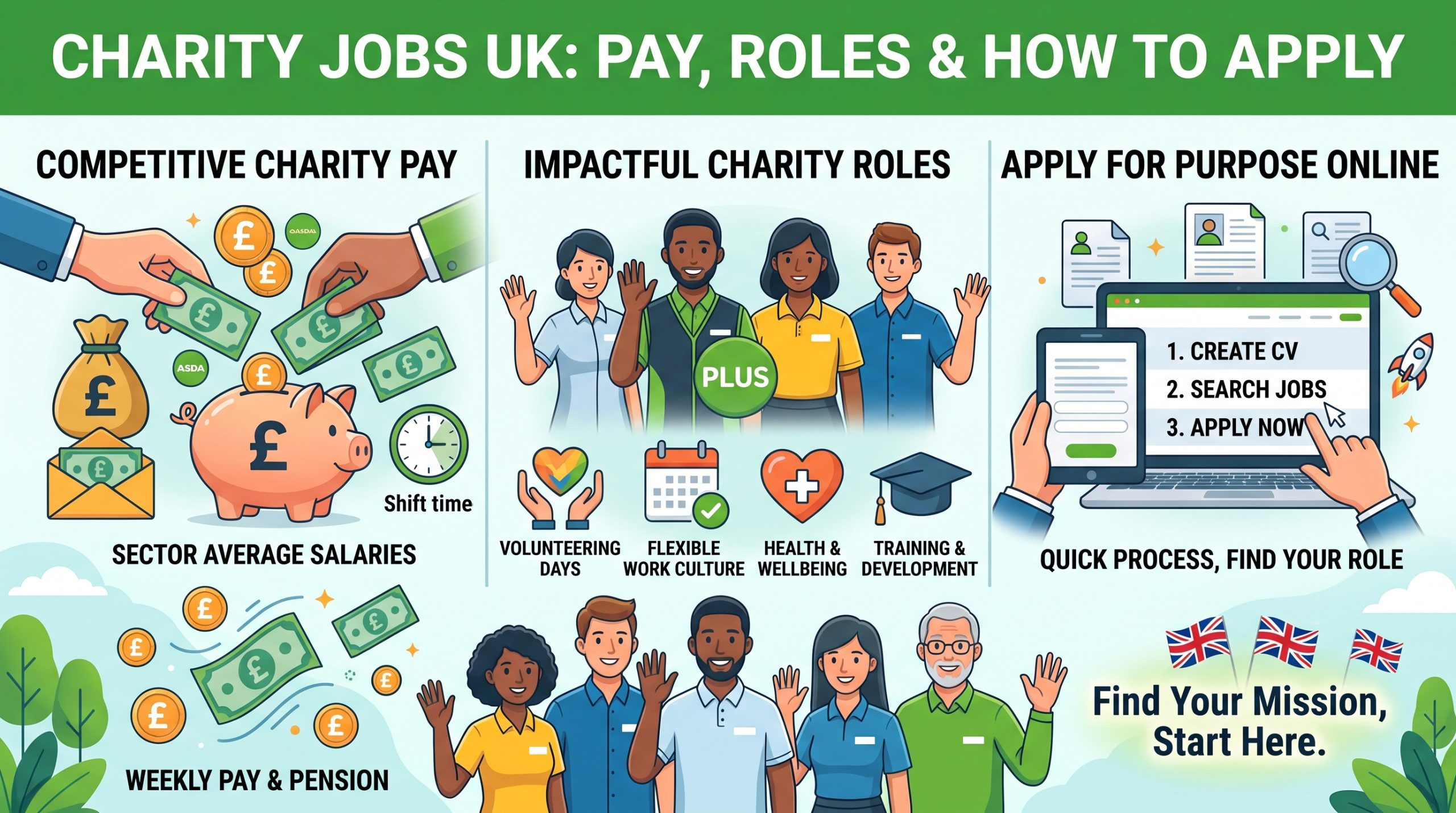
Pay is one of the most important things to research before you apply, and it varies widely by organisation, role and location. Entry-level charity roles typically pay roughly £18,000 to £26,000 per year. For example, a fundraising assistant outside a graduate scheme would commonly sit within this range.
These figures are approximate and should be confirmed against the specific job listing.
The overall charity sector salary picture looks higher at first glance: the median salary for roles posted across the sector is around £35,000. However, this figure is skewed upwards by senior and specialist positions such as directors, heads of department and experienced fundraisers.
It is not representative of what most entry-level applicants will be offered.
It is honest to say that many entry roles are modest, and some sit close to the real living wage rather than well above it. Pay in the charity sector is generally lower than in comparable commercial roles, and it is not guaranteed.
Always check the advertised salary, whether it is full-time or pro rata for part-time hours, and how it compares with living costs in your area.
Benefits and rewards (a realistic view)
Beyond pay, charity jobs can offer rewards that matter to many people. The most commonly cited is a sense of purpose: working towards a cause you care about. While this is genuine for many, it should not be used to justify low pay, so weigh it alongside the practical terms of the job.
- Flexible and part-time working: many charities offer flexible hours, hybrid or remote options and part-time contracts, though this depends on the role.
- Development: smaller teams can mean broader responsibilities early on, which helps you build varied experience quickly.
- Pension and leave: most established charities offer a workplace pension and standard or enhanced annual leave.
- Values-driven culture: many people report supportive, mission-focused workplaces, though this varies by organisation.
Benefits differ greatly between employers, so confirm what is actually on offer in any specific role rather than assuming.
Requirements: what you need to apply
Requirements depend on the role, but entry-level charity jobs are often accessible to those without a long CV in the sector.
- Right to work: you must have the legal right to work in the UK. Some roles, especially in care or with vulnerable people, also require a DBS (criminal records) check.
- Core skills: communication, organisation, reliability, basic IT and teamwork are valued across nearly all roles.
- Volunteering experience: this genuinely helps. Volunteering shows commitment to a cause and gives you relevant examples to talk about, which can offset a lack of paid experience.
- Role-specific needs: some posts ask for qualifications, a driving licence or specific experience, while many entry roles are open to candidates with no experience.
Read each job description carefully and match your application to the listed essential and desirable criteria.
Where to find charity jobs and how to apply
The clearest route into the sector is through dedicated job boards and charity websites. CharityJob is the UK’s largest job board for the charity and non-profit sector, and you can browse current vacancies at https://www.charityjob.co.uk. Many charities also advertise directly on their own careers pages and on general job sites.
A straightforward way to approach your search and application:
- Step 1: Decide what you are looking for, such as role type, full-time or part-time, location and minimum pay.
- Step 2: Search the main charity job board and filter by entry-level roles, salary and hours.
- Step 3: Read each listing in full, noting the essential criteria, closing date and how the charity wants you to apply.
- Step 4: Prepare a tailored CV and a covering letter or application form that addresses the role.
- Step 5: Submit through the official application route stated in the listing and keep a record of what you applied for.
- Step 6: Set up alerts so you are notified when relevant roles are hiring.
Always apply through the official listing rather than third parties, and never pay a fee to apply for a job.
Tips for a strong application
Charity recruiters often receive many applications, so a focused, relevant submission helps you stand out.
- Lead with transferable skills: if you are changing careers or have no sector experience, highlight communication, organisation, customer service or event skills from any setting.
- Show your motivation: explain clearly why the cause and the role appeal to you, with specific reasons rather than generic statements.
- Use the criteria: mirror the language of the essential and desirable requirements and give short examples of how you meet each.
- Include volunteering: even informal or short-term volunteering is worth mentioning, as it signals genuine interest.
- Proofread: a clear, error-free application reflects the attention to detail many charity roles require.
Frequently asked questions
Can I get a charity job with no experience?
Yes. Many entry-level roles such as support worker, administrator and fundraising assistant accept applicants with no paid sector experience, especially if you can show relevant volunteering or transferable skills.
How much do entry-level charity jobs pay?
Entry-level roles typically pay roughly £18,000 to £26,000 per year, though this varies by organisation, role and location and is not guaranteed. Always check the advertised salary on the specific listing.
Are there part-time charity jobs?
Yes. The sector frequently offers part-time and flexible roles, particularly in support work, administration and fundraising. Pay for part-time roles is usually pro rata.
Where should I look for charity vacancies?
Dedicated job boards such as CharityJob, along with individual charity careers pages and general job sites, are the main places to find roles. Apply through the official listing for each vacancy.
Editorial note
This is an independent guide intended for general information only. It is not affiliated with or endorsed by any charity, employer or job board. Pay figures and role descriptions are approximate and can change; salaries vary widely and are never guaranteed.
Always confirm current vacancies, pay, requirements and application steps on the official job listing or the employer’s own website before applying.